Jeremy Maskel and Maggie Cunningham
The journalism and communication job market places steep competition between those who are trying to get into this field, they must continually improve themselves and network with people for not only job opportunities but stories as well.
Jeremy Maskel and Maggie Cunningham were the guest speakers during last Monday’s media storytelling class. Jeremy and Maggie had previously worked at KETV channel 7 for several years but left after wanting a different form of communication. They both now work in communications for Omaha Public School district.
Keeping students, teachers, and faculty in communication and keeping morale up has been an ongoing fight for these two as the pandemic continues to impact our everyday life. A constant and consistent flow of content must continue in different forms from physical print material to digital, which as seen a lot more engagement during the pandemic said Maggie.
Social media has become especially useful to get messages out in a short time frame. Maggie worked on many digital pieces that notified students and parents of resources available such as laptops or food drives to help continue education during the pandemic.
“Reporters use twitter constantly because it has the fastest information,” said Maggie.
Over the past few months, Jeremy has received hundreds of requests for information especially from news outlets, and stressed how important it is for someone in a communication position to build relationships with reporters.
“It’s important to understand the perspective of people in different positions,” said Jeremy.
Building a relationship with them and showing that the reporter can trust you and be honest and authentic with them will mean for clearer understanding and better message transmission. Networking with people also very important as it can prove as a valuable resource when trying to find the proper answers and inform an audience.
“I have huge admiration for the storytellers,” said Jeremy.
Word Count: 309
Glacier Creek Preserve
Crisis Communication Assignment
- I reviewed the Goodwill for my crisis communication assignment.
- I reviewed Goodwill’s twitter page. https://twitter.com/GoodwillIntl?ref_src=twsrc%5Egoogle%7Ctwcamp%5Eserp%7Ctwgr%5Eauthor
- The goodwill has been posting regular updates and information for people that have lost work and information on the tax return that people will be receiving.
- They haven’t received much feedback on the posts they have made, mostly just a few retweets and people liking the posts.
- I have to be honest; I hate the goodwill but whoever is running the twitter page has done a decent job. I think they have stayed on top of the issues and have been posting some decent information on where people can get help.
AI and Natural Language Systems
Narrator: The field of artificial intelligence continues to explode, digital assistants, facial recognition systems and self-driving cars are just the tip of the ice burg as computers improve and the systems become more complex.
Narrator: Working on improving AI and how it understands human writing was the aim of research being conducted by Craig Olson, a student of Information Systems at the University of Nebraska Omaha.
Insert Sound Byte 1 “Craig Olson” 0:20-0:35
Narrator: A question-answer system is a computer program that a human can type in a question using natural languages, like how we talk in everyday life, and the system would be able to respond to the inquiry.
Narrator: Currently, most companies that deal with language processing use a form of machine learning, this is where large amounts of data are fed to a computer that then looks for patterns and use probability to give proper responses back. This requires huge amounts of computational power.
Narrator: Craig explains that part of the reason why we humans can understand sentences so easily and computers struggle is because we have a common-sense understanding of the world, we live in. People understand you must have an action before a reaction. Craig looked to bring that type of reasoning to computers.
Insert Sound Byte 2 “Craig Olson” 1:15 – 1:51
Narrator: Not only could these computer systems understand us better but they could also become more resilient to what Craig calls “noisy data” or data that is nonsense. This nonsense data can cause machine learning systems to send out wildly inaccurate information.
Insert Sound Byte 3 “Craig Olson” 2:05 – 2:42
Narrator: Craig thinks as the field continues to rapidly change, systems like the one he developed along with others could come together to make far more advanced systems than the ones we are used to now.
Narrator: For the UNO School of Communication, I’m RC Miller.
Virtual Worlds
Narrator: The coronavirus pandemic has, almost overnight, changed how we interact, work, and entertain ourselves pushing the world online into virtual worlds instead of physical ones.
Narrator: Ph.D. Deepak Khazanchi, is a professor of information systems and Quantitative Analysis at the University of Nebraska Omaha and has studied how virtual worlds allow teams to interact and how a business may run in the future.
Narrator: Using a game called second life, Deepak and his assistants were able to set up a world and scenarios for teams to complete objectives and in doing so, record how the teams interacted, organized, what features of the game were used and more.
Insert Sound Byte 1 “Deepak Khazanchi” 0:36 – 1:06
Narrator: There tests led to some interesting results, not only were teams able to collaborate and complete complex tasks, the use of avatars allowed people to take on the persona of their avatar and expressing themselves and their opinions just like in real life.
Insert Sound Byte 2 “Deepak Khazanchi” 1:21 – 2:07
Narrator: In the future, this technology coupled with the use of virtual reality and augmented reality could be used to train people on new jobs or help them complete other jobs faster and more safely.
Insert Sound Byte 3 “Deepak Khazanchi” 2:18 – 2:52
For the UNO School of Communication, I’m RC Miller.
Radio in Modern Markets
Radio and audio programs have been around for a century, filling the airwaves with entertainment and news changing and evolving over the years demanding more and more form those that bring us content.
Last Monday, Jodeane Brownlee gave a presentation to the students of media storytelling one at the University of Nebraska Omaha via a zoom meeting.
Jodeane has always had a love of radio and said she has always been fascinated with words and storytelling. She began her career in journalism at a radio station based in Spencer Iowa, after which she moved on to become a reporter for a local TV station.
Jodeane now works at UNO and is a faculty advisor for MAV radio, a radio station ran by students and broadcasted from the campus. Mav radio allows students to get hands-on learning and experiment with different content to test the waters to see if this career path is for them.
When questioned about the relevancy of radio in today’s world Jodeane said she believes that radio will always be relevant but with the pandemic going on right now it is even more important. Furthermore, radio is requiring not just audio skills but video and social media skills as well as learning all the different pieces of software associated with that.
“I don’t think radio will ever go away, you will just need to wear more hats,” said Jodeane.
Jodeane stressed the importance of getting clarification on anything that a journalist may find confusing even if you feel dumb for asking she said. Understanding something as a journalist allows for a better translation to readers and a clear story.
Jodeane also mentioned how important it is to check sources like the CDC for proper information on an ongoing situation such as the pandemic as a lot of information exists online and elsewhere that is not completely accurate.
Word Count 310.
Food Printer
Finding fresh sustainable food is an ongoing struggle for many and will continue as world population increases and global climate changes around us, at the University of Nebraska Omaha a research project is underway to bring gardening into the home.
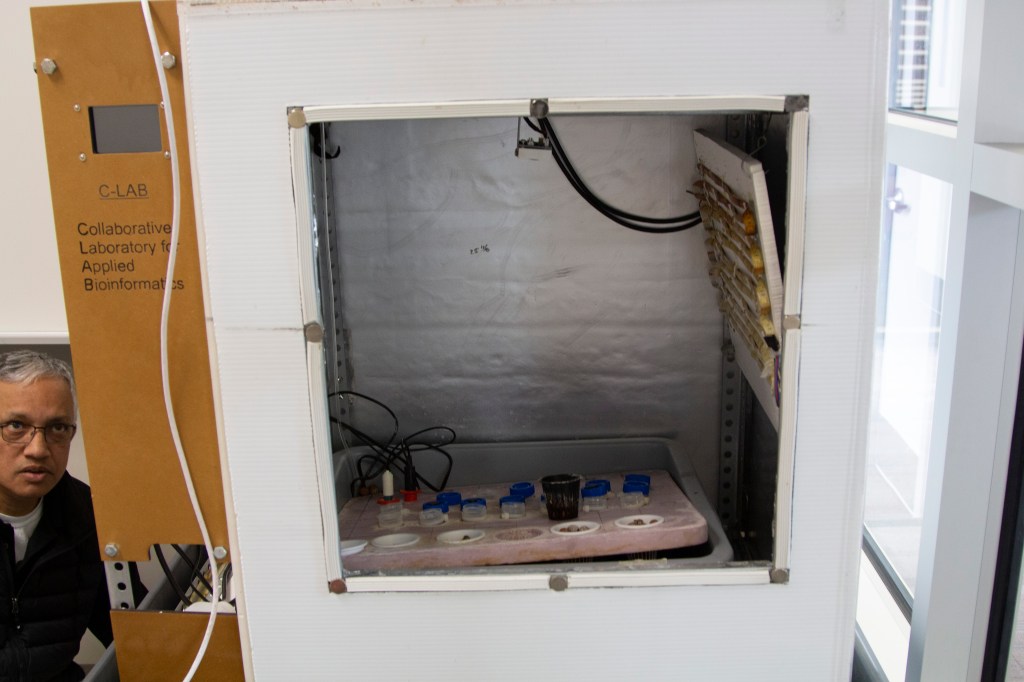
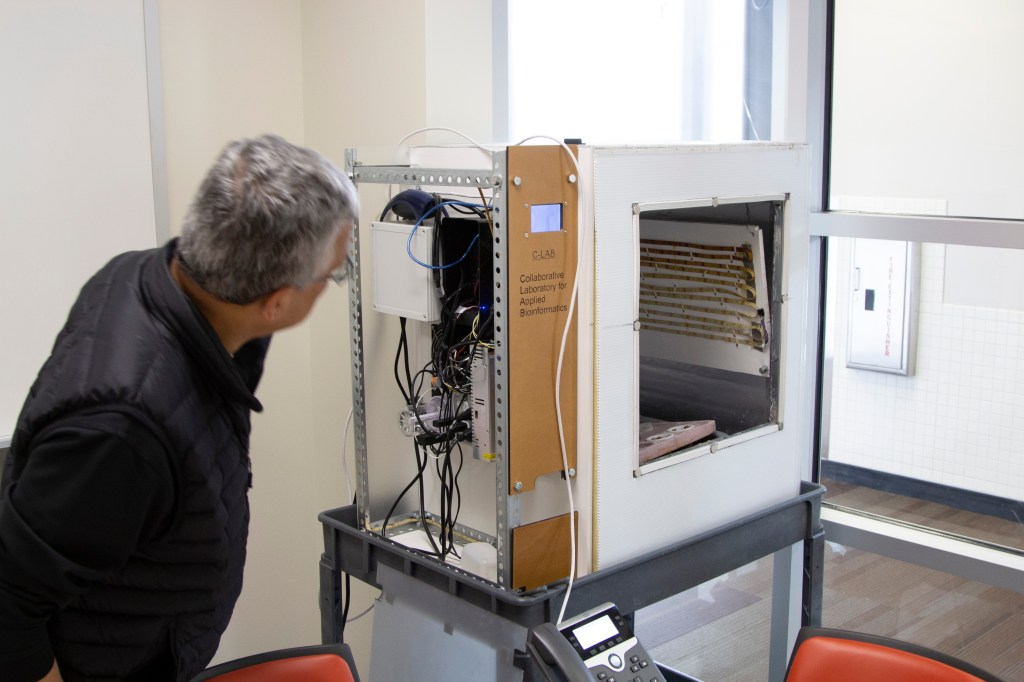
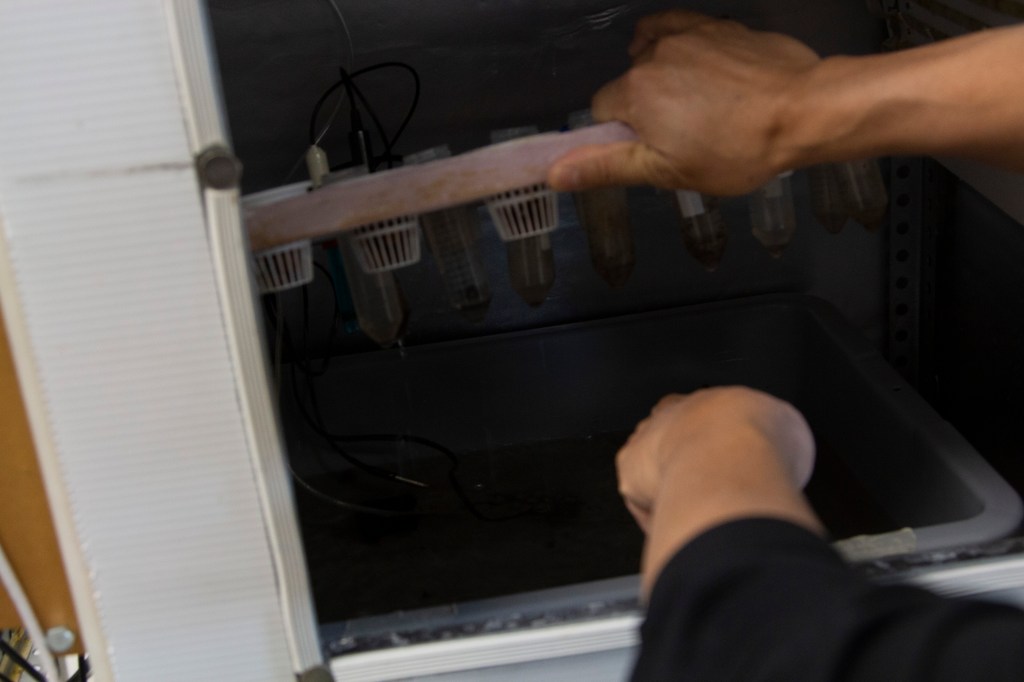
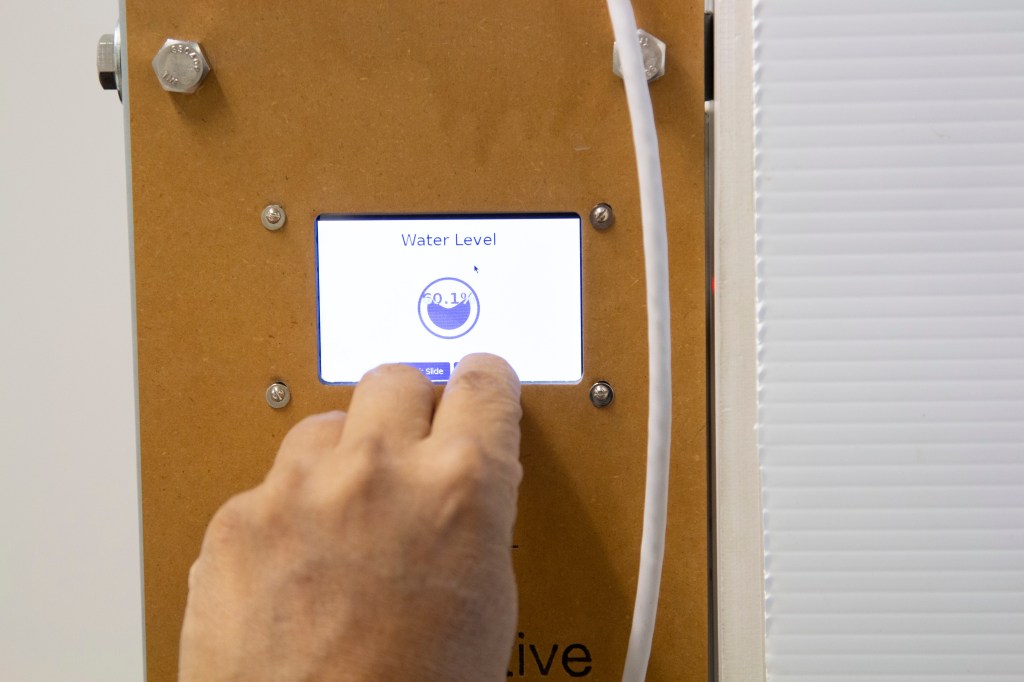
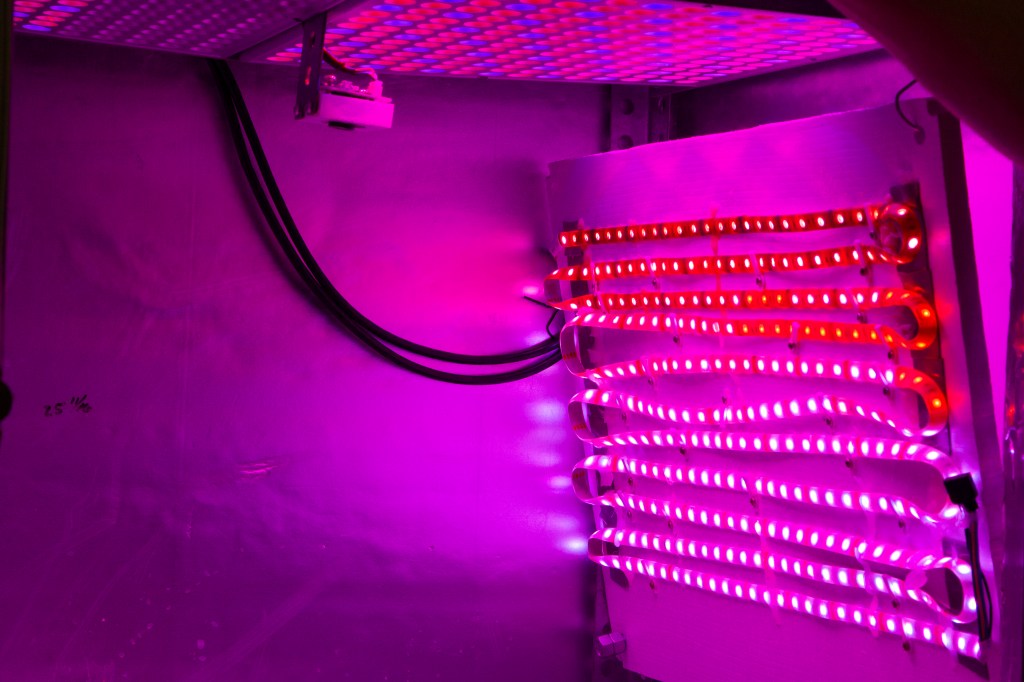
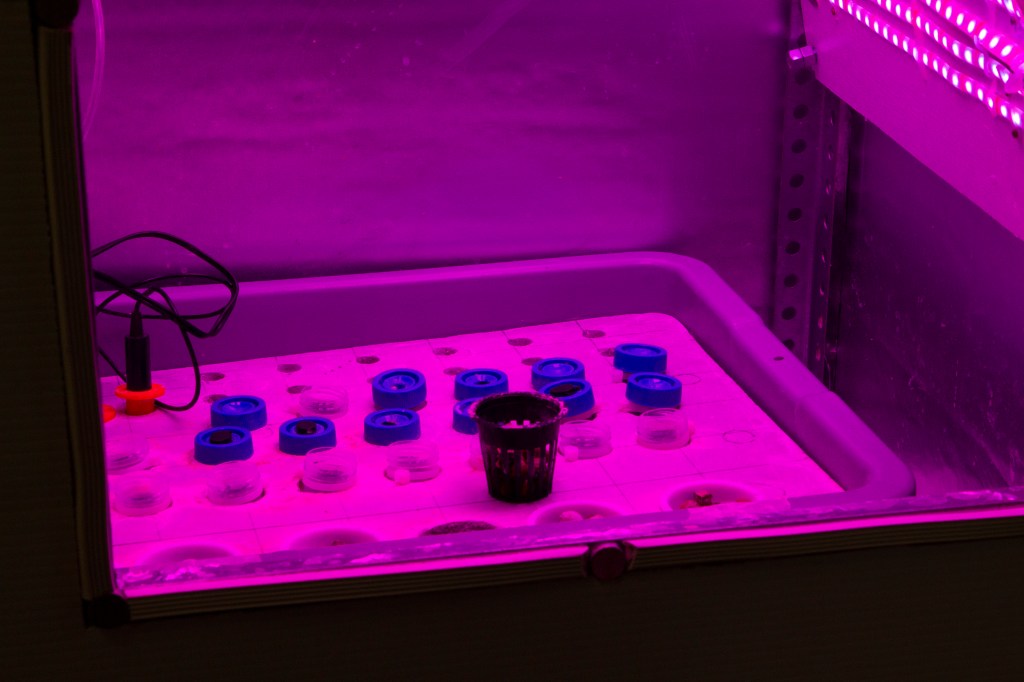
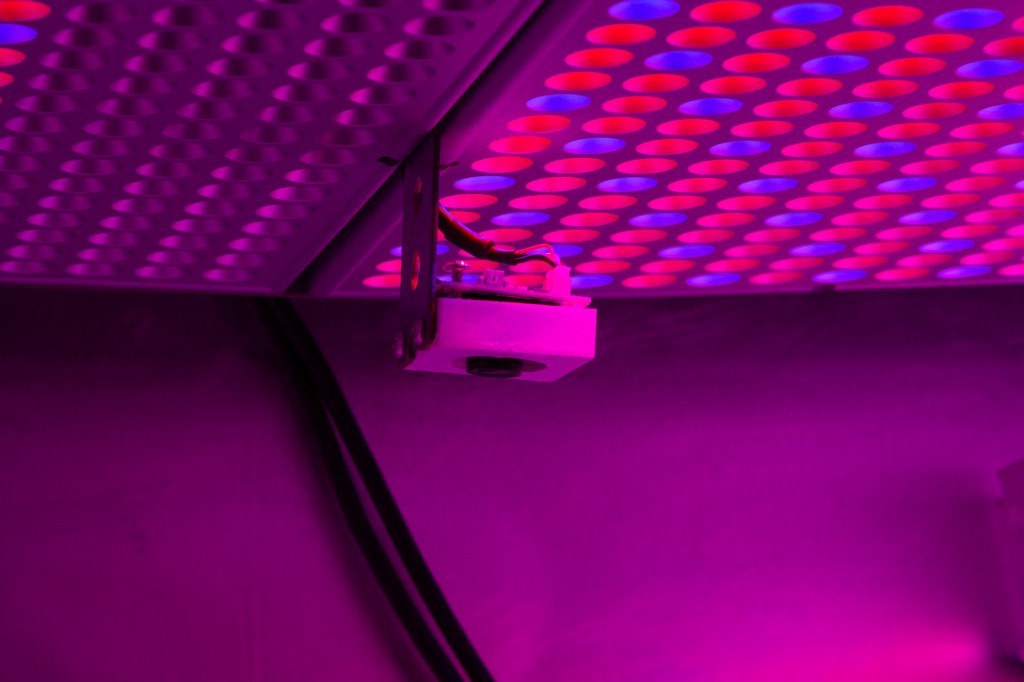
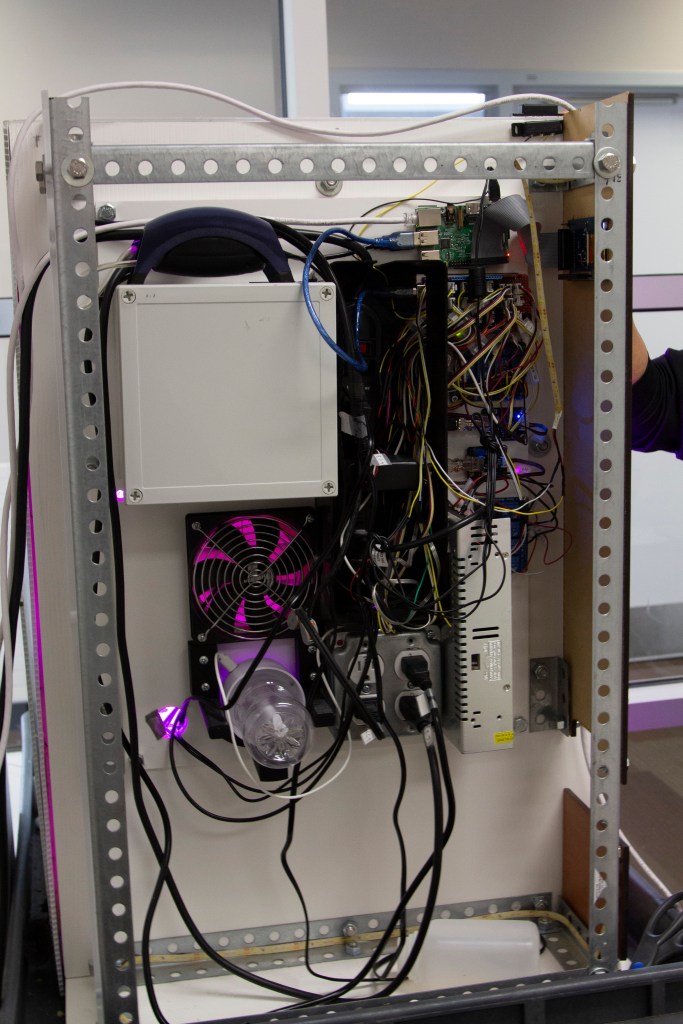
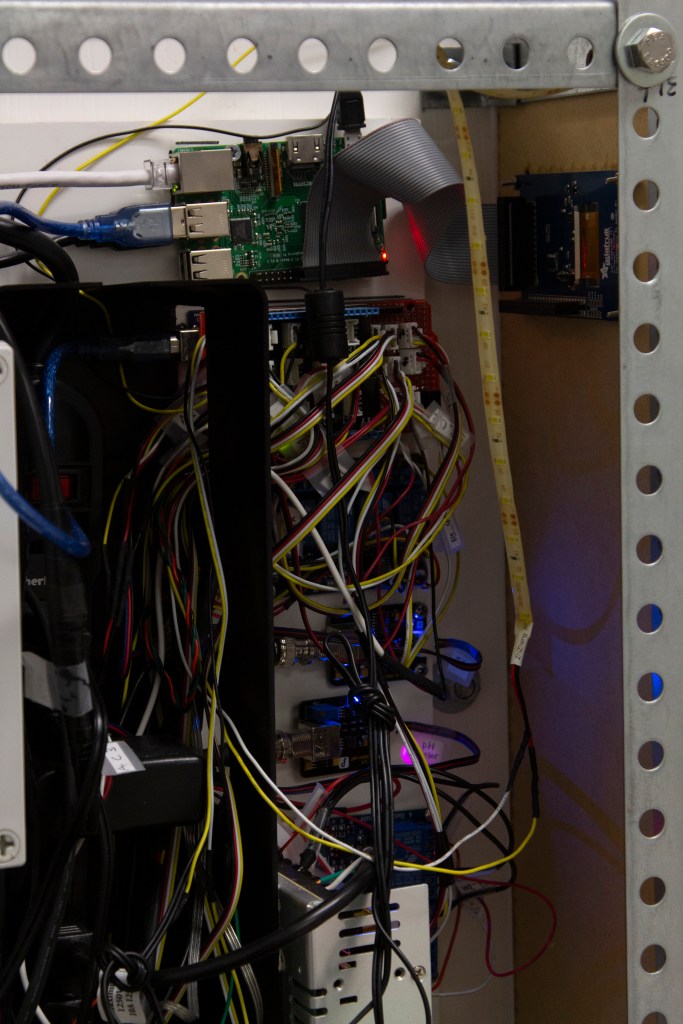
Ph.D. Dhundy Bastola has built a device he calls a food printer that can replicate many environments on earth by carefully maintaining, humidity, heat, light, and water nutrients. Carefully controlling these factors Bastola says they can achieve faster-growing plants and increase the nutritional or medicinal value of certain plants.
Bastola hopes one day that this prototype could one day become a standard household item such as a fridge or other appliance that people could rely on to grow their own produce. Incorporating a food printer into the home could reduce resource demand on the land and supplement the food supply.
In the meantime, Bastola sees the food printer as a teaching tool that brings many sciences together. Students from different studies, such as biology, engineering, and information technology have come together to create the food printer. Bastola hopes that a version of the food printer can exist in each department to further develop and improve upon the food printer.
Telling Stories through Photography.
The role of photography has expanded over the last century as journalists could now tell a story via a visual means, making readers more connected to the story and better able to understand a situation.
Charlee Steed talked with the class on how journalism and photography can work together to deliver a more complete story. He showed us how the Ney York Times has adopted photography into its print edition that was once all text, is now filled with photographs.
“Know the story before you take the photos,” said Charlee.
It is important to know what your story is and develop some ideas of what you are going to photograph. Having an idea of who or what you will be taking photos allows you to decide what equipment you will need. If you know you will be far away, it would be important to bring a telephoto lens or maybe even a tripod.
“Prominence will shape news stories and photos,” said Charlee.
Thinking of the story ahead of time makes you think about all the equipment you would need and makes you more likely to succeed once you finally go. Taking the time beforehand also allows you to double-check to make sure all your stuff works, batteries are charged and cards formatted. This all reduces the likely hood of some technical problem occurring and you missing your shot.
Once at the event it is a good idea to vary up your shots. A mix of medium, tight and action shots allow you to tell a more interesting story through your photos as compared to one static location. Mixing up shots will make people more engaged and force you to move around and see things from different perspectives.
Following some of these simple rules allows aspiring photojournalists to be more successful in this career field.
Student Research and Creative Activity Fair.
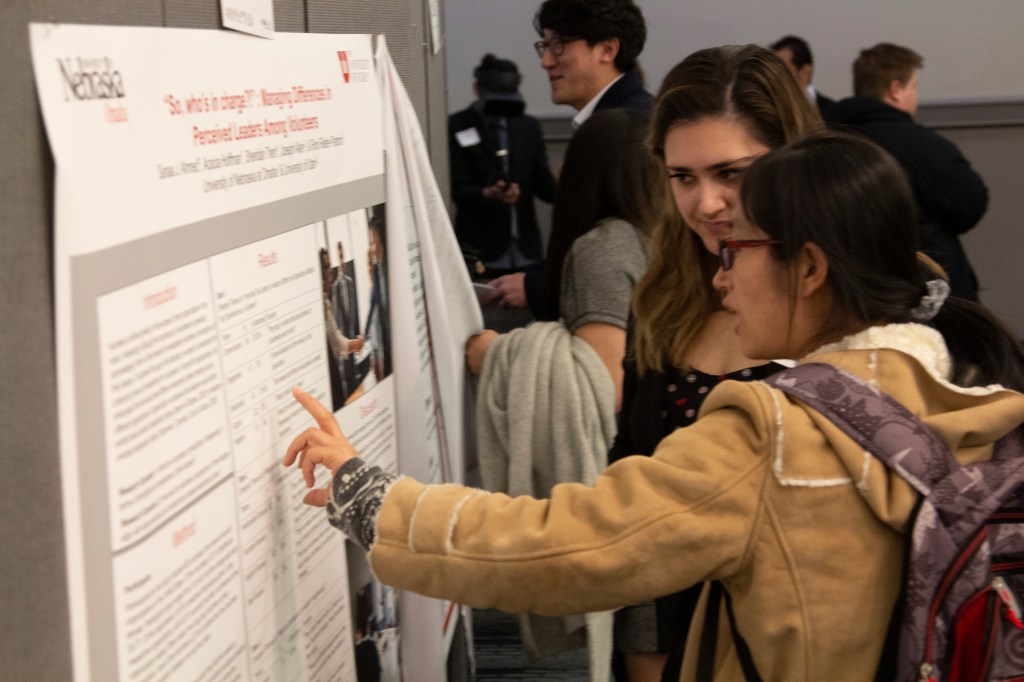
The 12th annual student research and creative activity fair took place this last Friday with students from all different areas of study, showing off the research they have been working on.
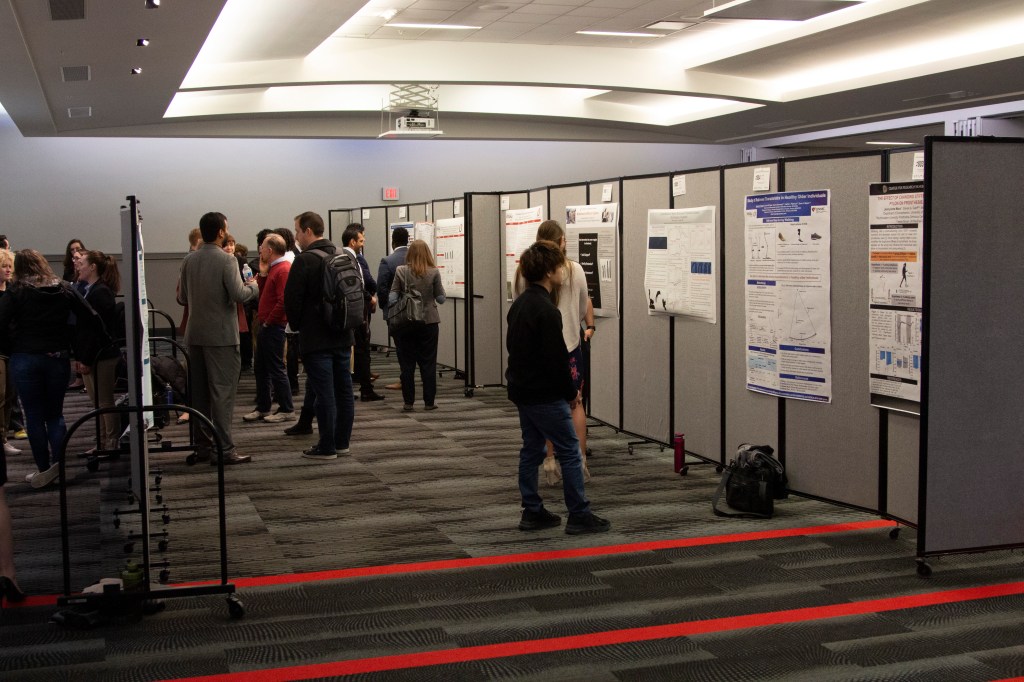
The event was held at the Milo Bail Student Center, those who were interested could view and or participate in demonstrations or ask those conducting the research to explain their research and findings.
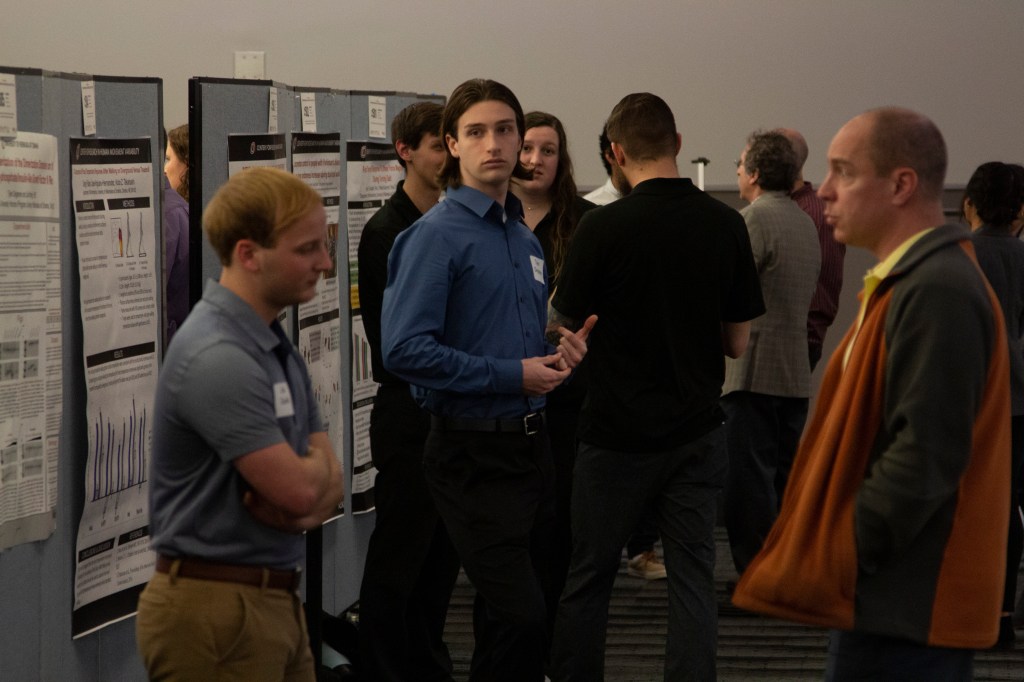
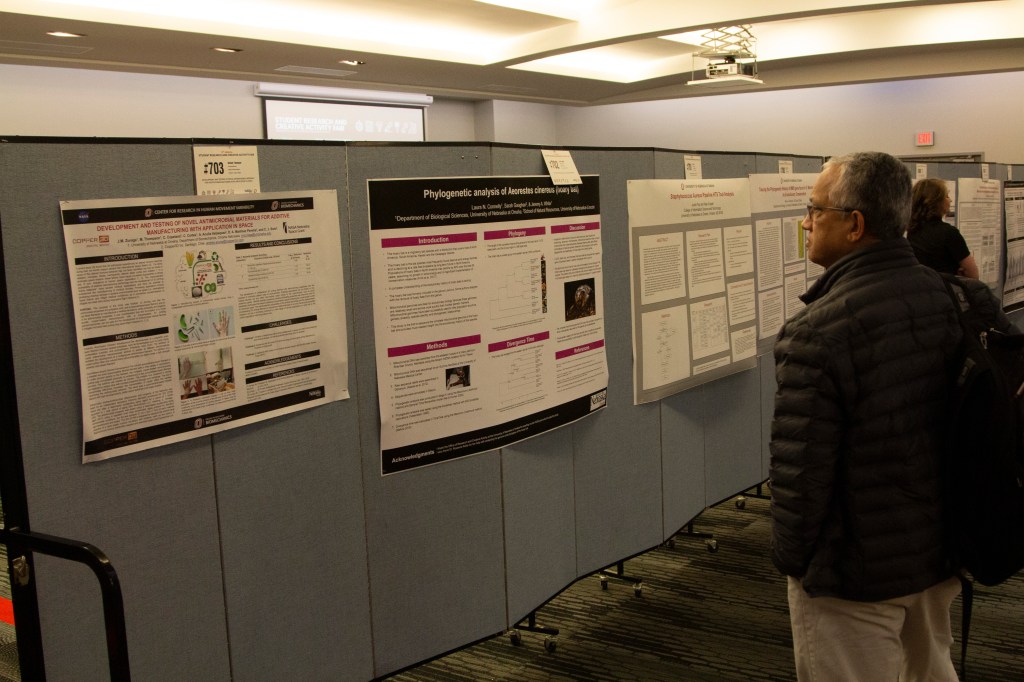
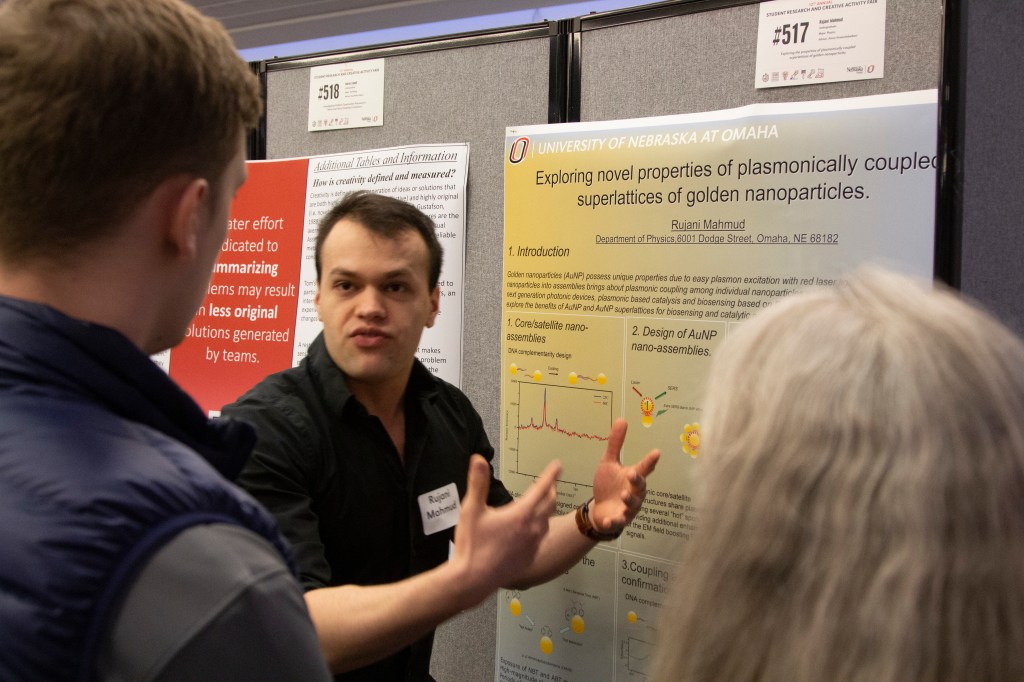
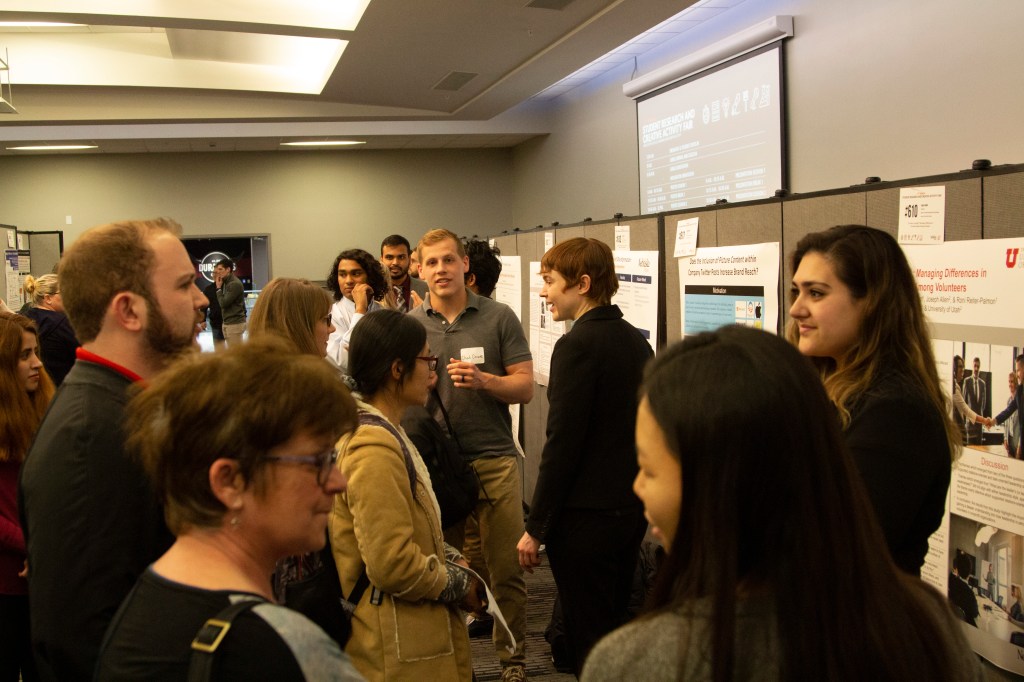
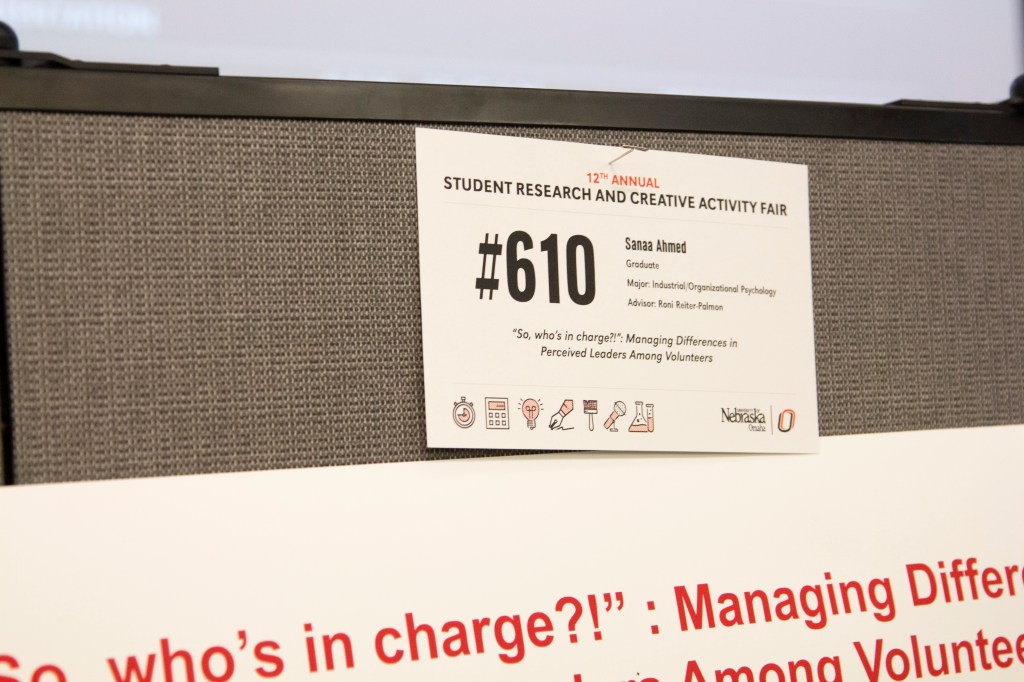
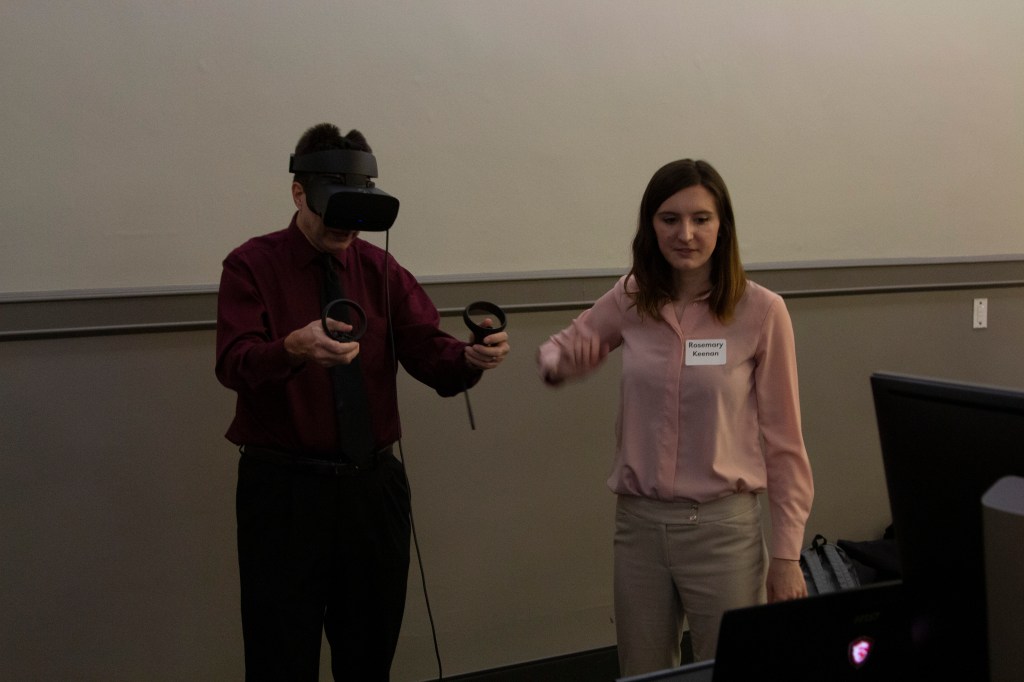
One of the most popular demonstrations at the fair was a virtual reality set up that people could put the headset on and dawn the controllers to interact with a world that had been created to help those with physical therapy.
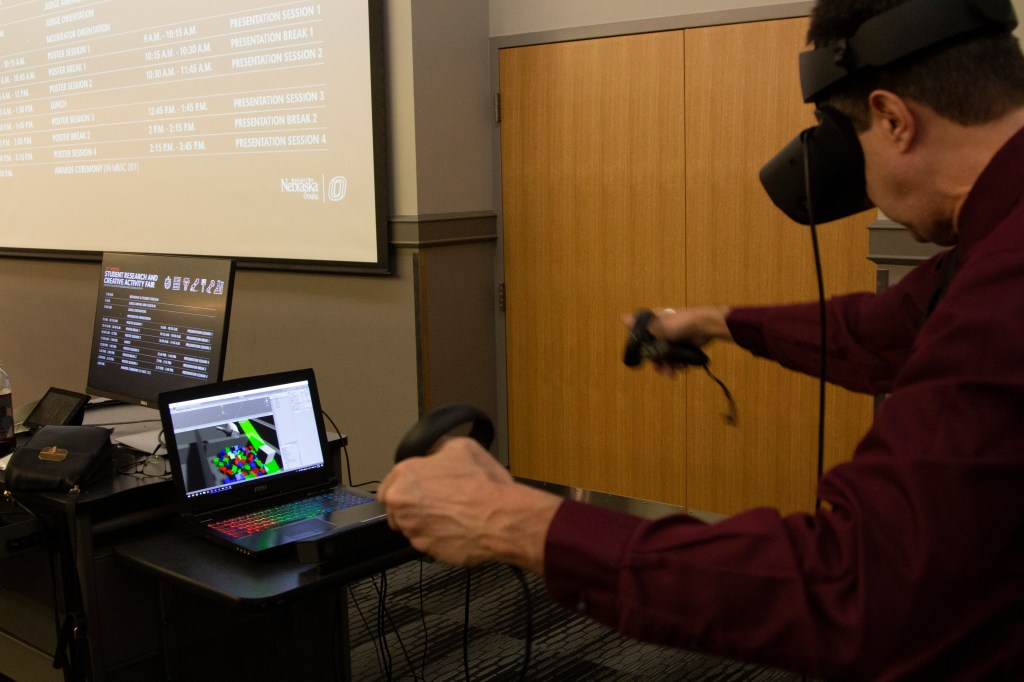
The demonstration is a proof of concept of how physical therapists could see how a patient is moving their body to interact with the virtual environment and prescribe exercises to the patient without having to be in the same building, or even in the same country.
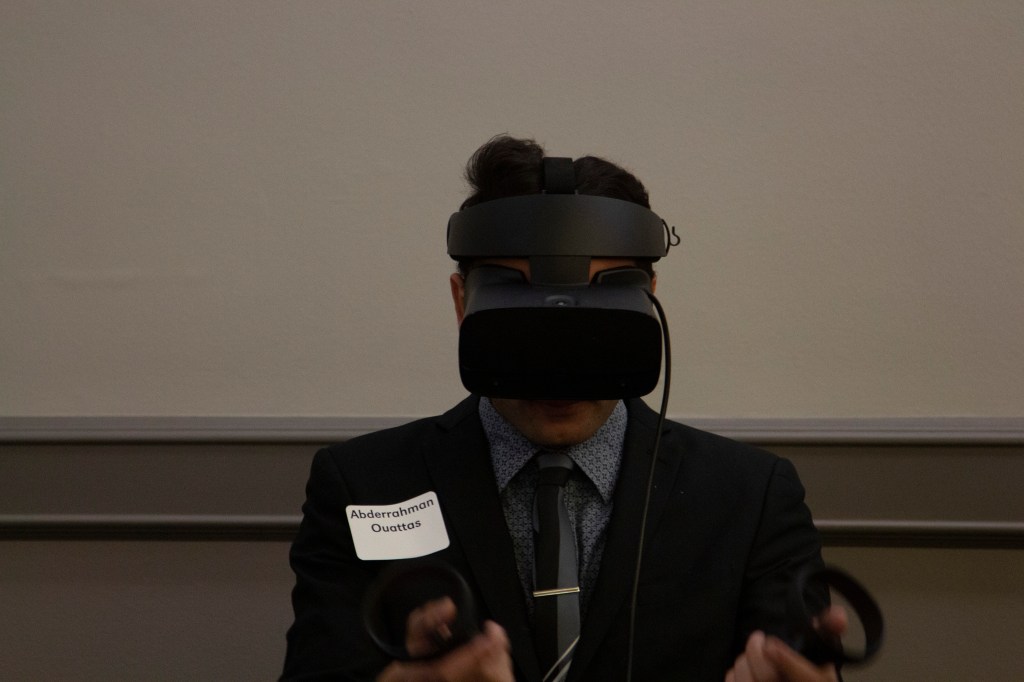
Participants were not only looking to bring attention to their work, but they are also competing against each other for prizes and awards.
 MAV Research